India sought the assistance of the United States for a ceasefire in response to Pakistan's strong retaliation.
Within hours of Delhi and Islamabad agreeing to a ceasefire brokered by US President Donald Trump, CNN's Nick Robertson claims that Pakistan's strong counterattack has shaken India's position, prompting India to quickly seek US mediation.
In an interview with CNN, Nick Robertson said, "When India attacked three Pakistani airbases, Pakistan launched a massive and sustained missile and rocket attack targeting Indian military installations, airbases and weapons depots. This left India in a state of shock — they had no idea what was happening."
CNN's Nick Robertson
The ongoing tensions between the two countries began on May 7, when India carried out an "unprovoked" cross-border attack that killed at least 31 civilians, including children. In response, Pakistan shot down five Indian fighter jets, three of which were Rafales, as well as dozens of drones.
At that time, India sent several drones into Pakistani airspace, of which Pakistan shot down about 80. Among these drones was an Israeli-made IAE Heron UAV.
On Friday night, India launched simultaneous missile attacks on three Pakistani air bases — Nur Khan, Murid and Sharkot. The missiles were launched from aircraft, said Lieutenant General Ahmed Sharif Chowdhury, Director General of Pakistan’s Inter-Services Public Relations (ISPR).
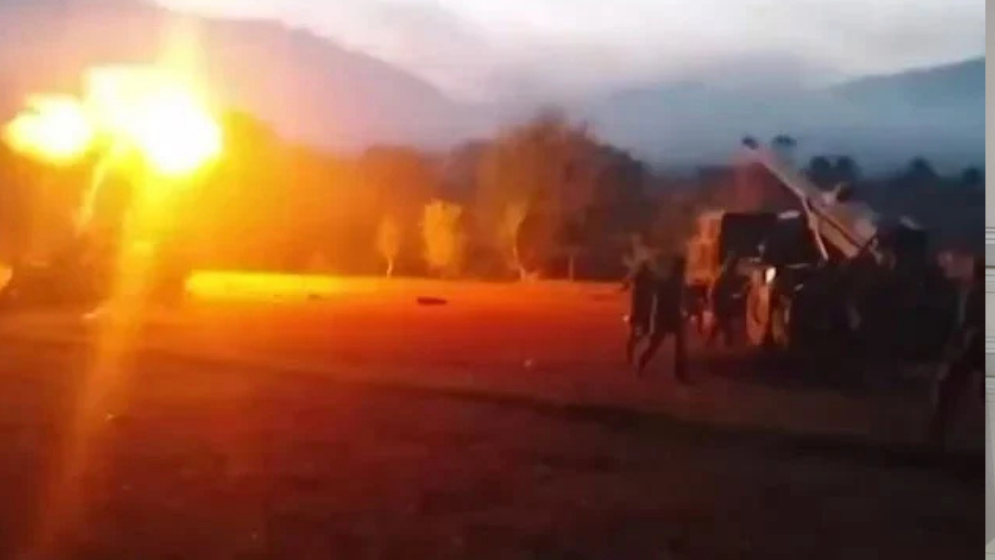
In response, Pakistan launched ‘Operation Bunya Num Marsus’ on Saturday morning, which targeted several Indian military bases and a missile storage facility in northern India.
President Trump then announced that India and Pakistan had agreed to a complete and immediate ceasefire. The agreement was finally possible after four days of strikes and counter-strikes.
Trump wrote on his Truth social account, "After a long night of US-brokered talks, I am pleased to announce that India and Pakistan have reached a complete and immediate ceasefire. I congratulate both countries for their good use of common sense and intelligence."
CNN's Nick Robertson said that a source present at a high-level diplomatic meeting said that Pakistan initially kept the diplomatic channel open with a "military pause," but when India attacked three airbases, Pakistan was forced to use its full military might. India then quickly sought mediation through US Secretary of State Marco Rubio, Saudi Arabia and Turkish officials.
After several rounds of tension throughout the day, the ceasefire was finally agreed to under international diplomatic pressure. Robertson said that sources described the ceasefire as a "if not now, then never" moment.
He added that water rights remain a key issue for Pakistan.
He said that the most important issue ahead for Pakistan is water, but for now the ceasefire is in effect — after that the situation will progress step by step.


Comments
Post a Comment